
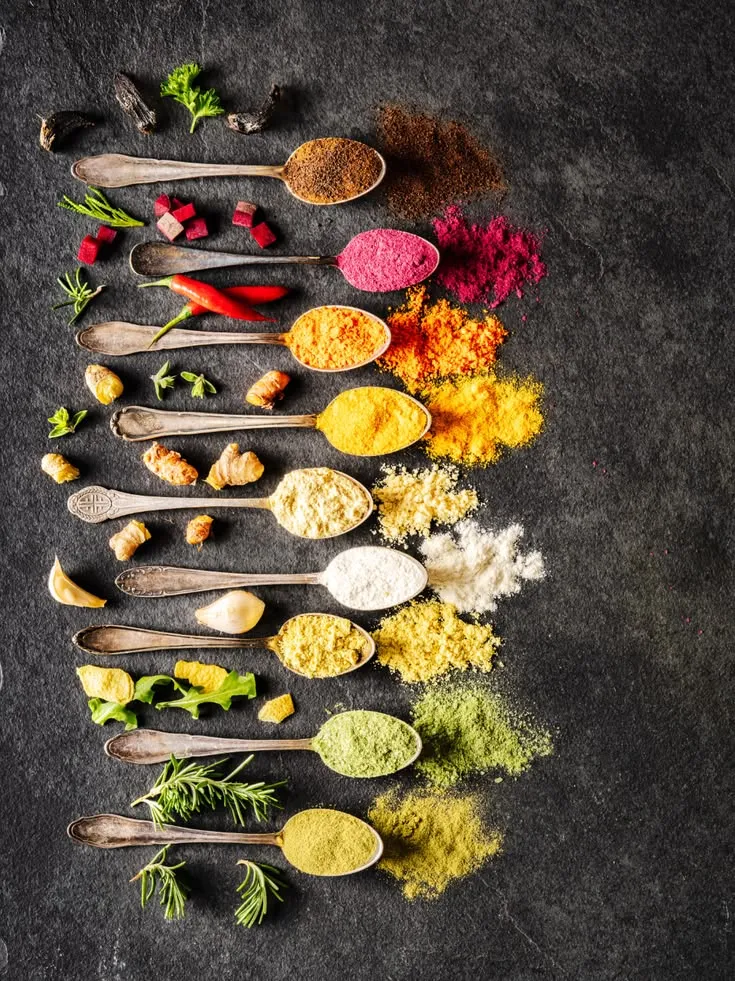
Choosing natural color for a savory product starts with the food itself, not with a shade card. Developers working with natural food colors have to consider moisture, fat, acidity, heat, and the way seasonings or sauces are mixed. A yellow that looks clean in water may appear duller in a spice blend, while an orange can deepen once oil and other ingredients are present. Testing inside the full recipe gives a much better picture of how the finished product will actually look in real commercial production.
Seasoning Powders Can Expose Mixing Problems
Dry seasonings seem simple, yet they can reveal color problems quickly. A powder has to spread through salt, spices, starches, and flavor ingredients without collecting in one area. If distribution is uneven, some portions of the final snack may look darker than others. Pre-blending the color with another dry ingredient can sometimes improve coverage, but the best method depends on the production line. Small trials should copy the real mixing order and timing so developers can see whether the color stays evenly distributed before larger batches begin.
Sauces Bring Water, Fat, and Acidity Together
Sauces create another kind of challenge because several phases may exist in the same formula. Water, oil, acids, gums, and solids can all affect how a natural pigment disperses and how bright the shade appears. A color that works well in a dry seasoning may need a different format in a sauce. Developers should also check when the color is added. Introducing it before heating, after emulsification, or near the end of processing can produce different results, especially when the formula is thick or contains visible spices.
Annatto Fits Many Warm Savory Shades
For yellow-to-orange applications, annatto food coloring gives formulators several routes. FoodRGB identifies bixin and norbixin as its main annatto pigments and offers powder, liquid, oil, and custom formulations. Its seasoning guidance also lists annatto as an orange option for savory blends. That flexibility matters because one product may need a water-compatible system while another contains more fat. The goal is not simply to choose annatto, but to choose the form that fits the recipe and equipment already in use during routine commercial production at scale.
Heat Should Be Tested in the Real Process
Savory products often meet heat at more than one stage. Seasonings may be added to warm coatings, sauces can be cooked or hot-filled, and prepared foods may go through reheating or sterilization. FoodRGB describes annatto as heat-stable within its stated working conditions, but a manufacturer should still copy the actual process during development. Time and temperature vary from one product to another. Looking at the shade after heating and again after cooling shows whether the selected system keeps the appearance that the team expects in production.
Dispersion Matters as Much as Color Strength
When a trial looks pale or uneven, adding more pigment is not always the answer. The problem may be poor dispersion, an unsuitable format, or the point where the color enters the batch. A small change in mixing order can sometimes produce a cleaner result without increasing dosage. This is especially relevant in savory foods, where powders, oils, and solids compete for space in the formula. Side-by-side trials help developers separate a real color-strength issue from a mixing problem that should be solved another way.
Scale and Storage Can Change the Result
A bench sample is only one step toward a dependable commercial color. Larger mixers change movement through the batch, while longer holding times can expose the pigment to different conditions. Packaging and storage matter too. Light, oxygen, temperature, and moisture may influence the finished appearance over time, particularly in products sold in clear containers or flexible pouches. Keeping samples from pilot runs and checking them during realistic storage gives the team more useful evidence than approving a shade immediately after the first successful production test.
Conclusion
Savory color development works best when the shade is treated as part of the recipe and production process. Seasonings, sauces, coatings, and prepared foods each bring different questions about water, fat, heat, mixing, and storage. Annatto can provide useful yellow-to-orange options, but its format still needs to match the application. Manufacturers can use foodrgb.com to review natural color systems and technical support for savory products. Careful testing allows teams to select a color that spreads uniformly, survives processing and stays appealing when the finished product arrives with clients.